
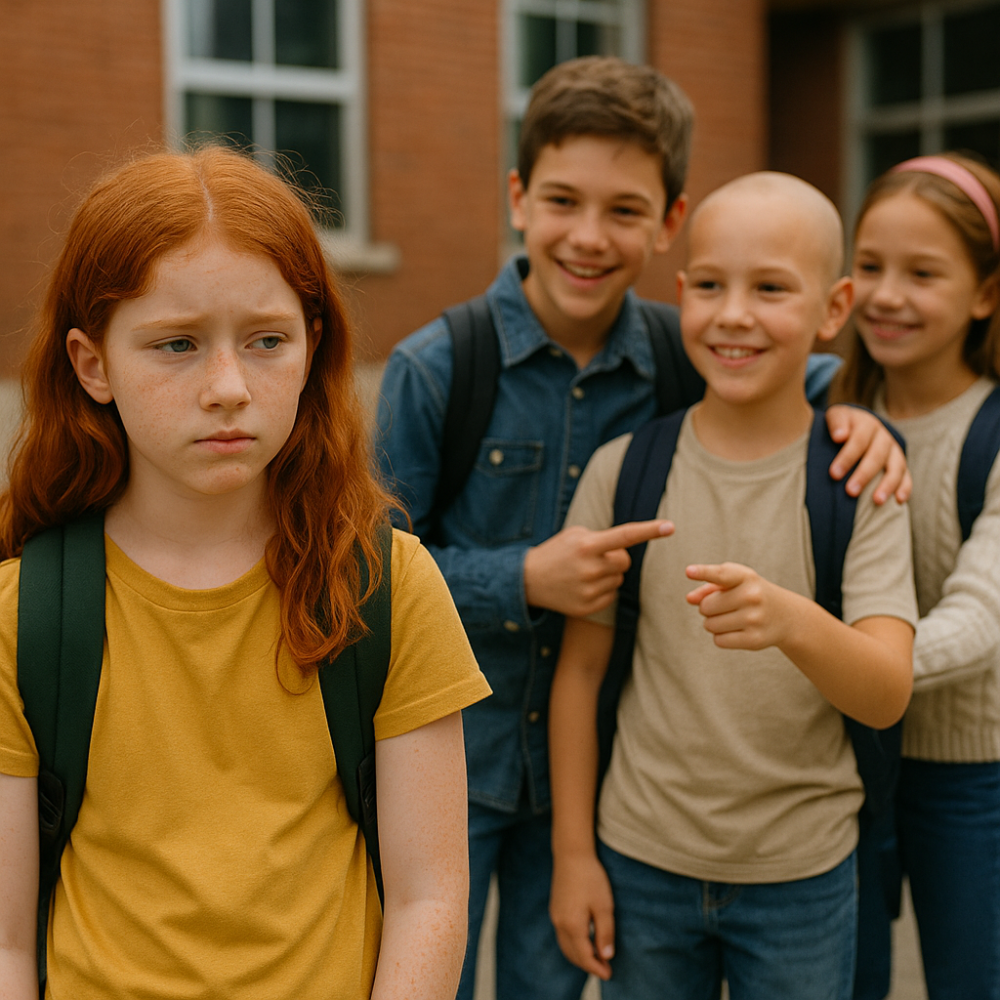
How do we build a positive, non-bullying environment that protects our children wherever they are?
Bullying is a painful phenomenon with devastating effects on a child's psyche. Unfortunately, it is becoming increasingly prevalent in our schools and communities. It is one of the most significant psychological and behavioral challenges facing children, leaving deep scars on the souls of its victims that are difficult to erase.
To understand the phenomenon from a new perspective, we, as teachers and parents, bear a great responsibility to build a safe, stimulating, and supportive educational and social environment based on mutual respect, acceptance, and the acceptance of differences. It's not just about reducing bullying, but we must strive to plant the seeds of empathy and compassion early on so that they can blossom and bear fruit, generating generosity and positivity in the hearts and minds of our children.
Recent research confirms that bullying is not just bad individual behavior, but is often driven by complex social dynamics, such as a desire for control, attention, or even a reflection of problems faced by the bully themselves.
The latest studies also indicate that effective intervention must be in the upbringing that teaches children the disadvantages of bullying. We must educate them about its dangers if it occurs and intervene comprehensively. Our intervention should not be limited to punishing the bully only, but:
- Supporting the victim: by containing him and providing psychological and emotional support to enhance his resilience and ability to see his strengths, restore his self-confidence, and teach him conflict resolution skills and dealing with others with strength and confidence.
- Changing school culture: It is important to build a strong school culture that rejects bullying in all its forms, encourages empathy and inclusion, implements protection laws, and investigates the roots of the problem that caused bullying in the first place and eliminates it.
- Peer intervention: Encouraging students to interact positively to reduce bullying, support victims, and resist bullies.
- Parental Engagement: Collaboration between school and home to promote the same values and practices. In light of the significant increase in bullying among children, emotional and educational containment has become an indispensable necessity. Containment is one of the most important methods of prevention and treatment, as it has an impact on enhancing the child's sense of security and belonging. When a child feels heard, understood, and accepted as he is, his need for negative outlets, which manifests in harming others, decreases, and the likelihood of him turning into a bully or a victim decreases. Hence, the role of the family, teachers, and educational institutions in creating a supportive environment that surrounds the child with love, care, understanding, and containment, and contributes effectively to reducing bullying behaviors and its complications.
Inclusion is not just a slogan, it is an everyday behavior that can make a huge difference in children's lives.
Among the unforgettable inspiring stories that serve as a strong and supportive example of the idea:
At the Sanad Association for Supporting Children with Cancer, I came across an inspiring story. It was mentioned at a conference about a young child who returned to school after a long absence due to a battle with cancer. He looked emaciated and had lost his hair as a result of treatment. This can be a painful and embarrassing situation for the child, making him feel embarrassed, alone, and different. But neither the teacher nor the child's classmates allowed this to happen. On the day of his return, he wasn't alone without hair. The teacher and all his classmates shaved their heads in solidarity with him! Imagine the impact that had on the child! He felt he wasn't alone, and that his differences were part of the group's solidarity. This real-life incident not only prevented bullying but also instilled deep values of acceptance, solidarity, and compassion.
How can teachers and parents foster an inclusive environment?
- Be a positive role model: Show compassion, acceptance, and respect in your daily interactions with everyone, whether at home or at school.
- Teach children empathy: Encourage them to put themselves in others' shoes and understand their feelings, and use stories and open discussions as a way to develop this skill.
- Celebrate differences: Teach children that diversity in shape, color, abilities, and interests is what makes the world rich and beautiful, and encourage them to talk about these differences positively.
- Enhance communication skills: Teach children how to express their feelings and needs in a healthy way, and how to resolve conflicts without resorting to bullying.
- Provide safe spaces: Children should feel comfortable and safe talking about any bullying they experience or witness.
- Activate the role of positive bystanders: Train students on how to intervene safely and effectively when they witness bullying, whether by reporting it or providing support to the victim.
- Ongoing collaboration between home and school: sharing information and expertise to ensure a unified and integrated message about rejecting bullying and promoting inclusion.
Use stories to set positive examples, such as the story of " The Little Red-Haired Girl ."
It tells the story of a little girl with "crazy" and distinctive red hair, who may have been subject to ridicule or bullying. Instead of becoming a weakness, her red hair becomes a strength thanks to her creativity and the support of her friends and teacher.
Building a safe, bullying-free school and community environment filled with compassion, inclusion, and ongoing awareness is a shared responsibility. This is how we raise generations who believe in the power of acceptance and celebrate distinction and difference—a generation that chooses inclusion, not bullying.
Finally, fighting bullying begins with kind words, an alert eye, and a compassionate heart. Children deserve safety, love, and inclusion to live in happiness and comfort.