
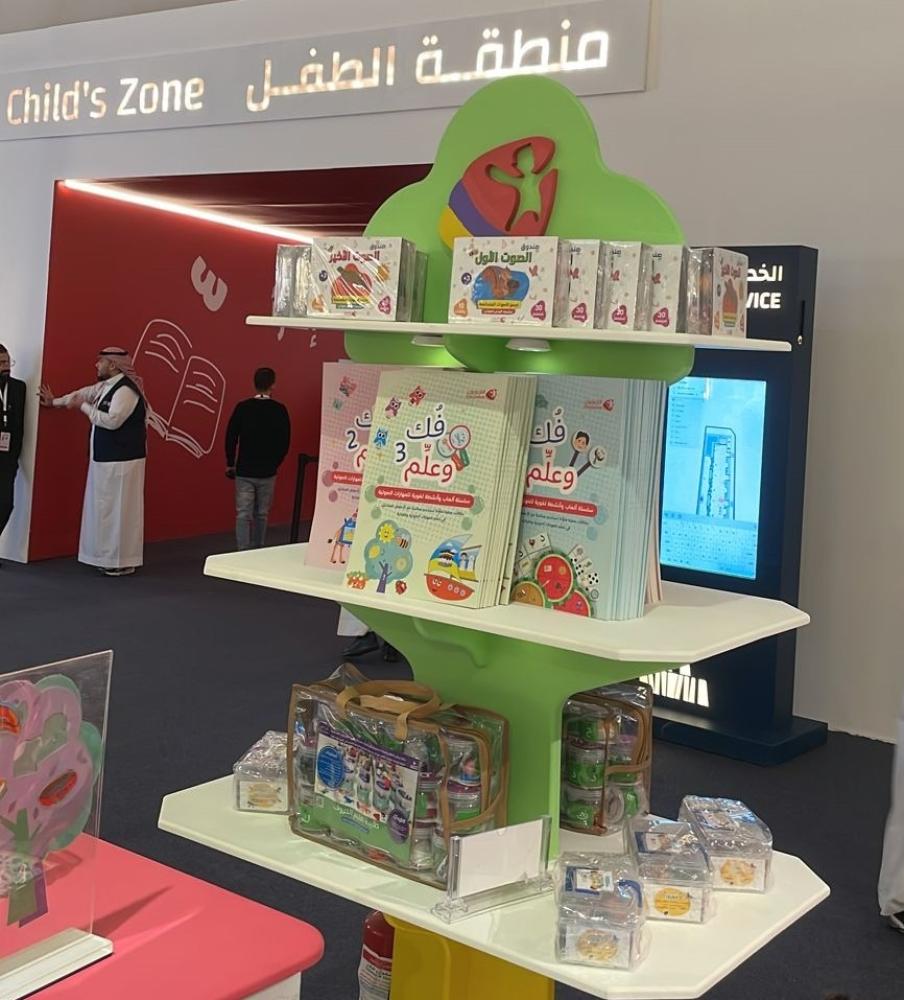
Children are the torchbearers of the future, and their relationships with their surroundings are shaped according to their experiences.
When we take them to markets or airports and they find places designated for them or things that appeal to them, they feel their value and importance in society, and this strengthens their sense of belonging.
It is very important that book fairs have special pavilions for children, because these pavilions make the child realize that he has a place that resembles him, and he can deal with it comfortably and freely, thus fulfilling his needs in the adult world, which is sometimes difficult for him to understand.
Allocating such places contributes to creating a sound orientation and a positive relationship between the child and reading in particular and knowledge in general.
When we deal with children, we find that play is their world and their main occupation through which they understand the world around them. So if you want to make them embrace knowledge and learning, mix it with fun and play.
In the children's corner, we read stories, and the children meet their authors and turn them into plays; this is of great importance. Dramatizing stories brings the printed book to life and transforms it into a lived reality for the child.
Moreover, turning paper books into cinematic or even cartoon films and then showing them together to the child makes him realize new and different dimensions of the role of books and their importance in his world.
It is also important that these spaces be used to provide knowledge, including an area for free reading, an area for educational activities derived from books, and artistic and scientific activities inspired by or based on book characters, especially since children love colors. Workshops and activities for children can be organized.
Developing a spirit of participation and community through a huge artwork in which all visitors to the exhibition participate. For example, young children can make it from old books or magazines.
Similarly, the child can write his own story. We set up a writing workshop and teach him the basics of writing. He sees authors and publishers at the exhibition, and this serves as motivation for him to create his own book.
It is possible to create an exhibition where children can learn about models written by their peers, whether published or unpublished.
Likewise, songs and poems in fine arts are something that young children need to hear.
Children are an integral part of society and they are the future, so bridges of connection between them and knowledge must be built early so that they can build a brighter tomorrow.