
These days we are living in unusual circumstances as the entire world is going through a unique crisis, which has imposed on us types of changes that we did not expect, or even cross any of our minds one day. We may sometimes find ourselves as if we are living in a movie, and we are overcome by a state of astonishment and disbelief. This is normal in this exceptional situation. We ask God Almighty to provide us with strength and have mercy on us with His mercy, and to remove the affliction from the nation of our Master Muhammad - may God bless him and grant him peace - and to include us in His vast mercy and lift the affliction from us with His grace, generosity and bounty.
We exist and the wheel of life must move, so let us think and analyze the current situation. What is happening today?! Why are we thinking negatively? Let us write a list of what is forbidden and what is allowed to review. What are the things that we are forbidden from: leaving the house, praying in the mosque, family gatherings, going to the markets, walking and going to parks and cinemas, going to the gym, going to the office and workplace, sending our children to school... Yes, I agree with you. These are all things that we are accustomed to and miss a lot, true. But this is the empty side of the cup. If we look at the full side, what do we have and what are the things that we can still do?
Thank God, we are healthy and well, we are not hospitalized, we are safe and secure in our homes, we are with our family members, we do our work, our children continue their education, our homes are equipped with everything we need, we have someone to serve us, all our needs can be requested or provided, we can practice any talent we like, we can communicate with our family, friends and neighbors, we have the internet, electricity and water, think with me what else ……………?
Aren't all these blessings worthy of consideration and praise and thanks to God Almighty that they will not disappear?
Man was created impatient, anxious, and impatient. These are the qualities with which God Almighty described us in the Quran. After each one, He tells us good news for those who are patient, have good thoughts about God, and are content with His judgment. Our attempts to adapt and deal effectively and positively with the current situation are the pinnacle of worship during times of calamity. Do not search for disturbing news and information that may weaken your resolve and confuse your mental state. Your positive mood will help protect your immune system, while it has been proven that negative thoughts weaken your immune system and make it unable to resist viruses. So why don't we focus on the variables and try to adapt to them? We still have tasks to perform and responsibilities that we need the strength to perform. There is nothing like negative thinking that dampens our resolve and prevents us from doing what is required of us. In this haste, I cannot cover all the challenges we face, but I will only discuss the transition to home schooling and offer some suggestions that I hope will be useful.
- Talk together and discuss the current situation. The first thing our children need to boost their morale is to encourage them and focus on what they can do, and listen to the challenges they face. They desperately need to express themselves and understand what they are going through. The more they talk about the problems, the more they will be able to absorb and understand them. Ask them to define them, then discuss them and encourage them to offer solutions from their point of view. With your help, you can adopt the most effective of these proposed solutions.
- It is very important for your children to see your trust in God Almighty, and for them to learn that from you. Tell them that you firmly believe that this pandemic will pass and that we will all be safe. You can tell them some stories of pandemics that the world has known throughout history and that passed peacefully. Thank God, we are in this era and we do not see the difficult and horrific scenes that our ancestors witnessed with pandemics like smallpox and the plague.
- Control your emotions and overcome your anxiety so that you do not pass it on to your children. Maintain calm and psychological comfort at home. Listen to the Holy Quran and allocate time to recite it, and to supplicate and pray to Allah Almighty to lift the affliction. Assign them tasks and responsibilities at home to keep them busy and make them feel accomplished. You can also relax by practicing some hobbies, group competitions, sports, and playing some recreational games.
- Agree with your child and make him understand that the situation is different now, and that he will attend classes from home and then do his homework. Maintain discipline at home, take the matter seriously, and make your children feel that the situation is serious and cannot be taken lightly because it relates to their health and future, and these are matters that negligence or tampering with has many long-lasting effects. Link your words to the future, and imagine with your child the consequences of negligence, and present possible scenarios in both cases; this helps with understanding.
- Organize your time at home, as this is the foundation of comfort. Set a specific system for meal and bedtime and stick to it. Don't make them feel chaotic, as this causes anxiety and stress. Lack of organization may lead the child to problems with malnutrition, stress, etc. Raise your child's awareness of the value of time and the importance of investing it. Make him feel that he is the leader of his time and the one in control of it. Let him contribute to setting the daily schedule for his studies, play, hobbies, and receiving his lessons. Discuss with him flexible times, such as playtime, sports, and completing homework, and pre-determined times that we cannot change, such as meeting the teacher and prayer times, for example. Divide the study time into separate hours interspersed with breaks so that he does not feel bored. You can use a stopwatch to determine the time; this may make the child feel superior to himself.
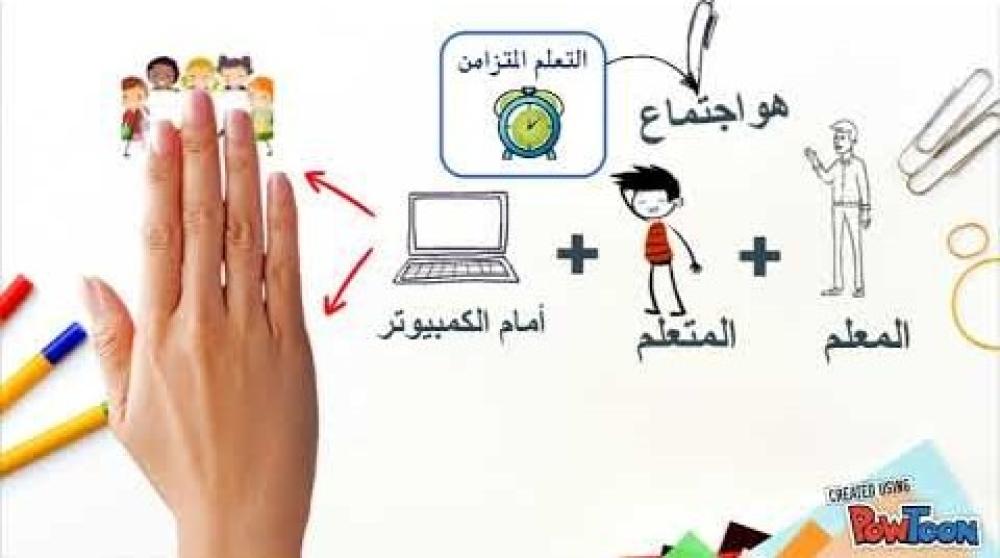
- After discussing and arranging appointments, organize your child's work time. Set a final schedule and plan the weekly and daily schedule with him. Allocate a specific time for receiving lessons, and another for doing homework and studying. This time should be fixed and have its basic controls. Make sure your child is at their peak activity during this time, and that it does not conflict with playtime or mealtime, so that he does not find it difficult to concentrate. Try to overcome the difficulties that the child faces by following up and providing him with his needs, such as headphones, internet, and appropriate devices. Be close if he needs your help. Open the way for him to communicate with his classmates remotely, as this helps him understand. You can create a learning group for a small number of your child's classmates, in which they can exchange knowledge, discuss what they have learned, and help each other understand the lessons.
- Remember that your role during this period is not to be a substitute teacher, but rather an assistant, a facilitator, and, most importantly, a friend to your child. Offer as much assistance as you can and do not overburden yourself, because the teacher is qualified to provide information, and you are doing your best to help. So, do not be harsh on yourself and try to play a role that is not yours, and do not pressure your child unless he is at a crucial stage; he needs to get the highest grades. Do what you can and leave the rest to God.
- Choose a quiet place that helps the child focus, and equip it with appropriate lighting and study tools (pens, computer, small library, etc.); so that it is away from the TV room, his siblings’ conversations, or any activities that might distract him. You can also hang a board on the wall, or use an easel to hang the subject schedules and the daily homework notebook, so that the child can write and scribble on it so that the ideas are clear like the school blackboard.
- Encourage your child to start with the more difficult assignments because their mind is clear and active. If they need more encouragement and motivation, let them start with the easier ones so they feel accomplished. Encourage your child to write down their homework in their own notebook. Encourage them to do this by putting encouraging stickers for each assignment they finish, or drawing a smiley face or a star. Support their energy with words of praise and compliments. Focus on their strengths and praise them. Then encourage them to check their wrong answers by saying, “Are you sure if you check this more you won’t get a different answer?”
- Don't cling to your child or hover around them during a learning session or homework. Gradually leave them alone until they learn to rely on themselves and don't become a "helpless learner." If your child gets bored with a subject, suggest a change or talk to them to break their boredom. It's very important to avoid doing your child's chores for them, as this can be dangerous. Your child may feel like a failure and inadequacy, and it can destroy their ability to rely on themselves. Be aware of your body language while following your child. Don't sigh or frown. Children are affected by negative non-verbal messages, which can make them feel frustrated, angry, and disappointed. A simple smile or pat doubles the effort and helps them continue working.
- You can teach your child some educational skills that will help him/her achieve, such as creating mind maps of the material, drawing a colorful summary of the content, or memorizing it through games. You can also find many easy and diverse educational strategies available on the Internet that you can employ to help your child, such as active learning. You can also apply some of the scientific experiments in the curriculum with your child to be a kind of practical application. This helps make learning fun, breaks the routine and boredom at home, and helps raise the level of understanding and comprehension.
- Think about the opportunities you have been given by turning school into home. You have always wanted to know what goes on inside your child's classroom, and you have always longed to meet their personality as it emerges at school, and to discover their hidden sides. This is an opportunity. Today you are in the classroom with your child, and the school cannot hide anything from you. Seize the opportunity, and be observant and discerning. Praise your child's behaviors that you like, discuss the negative ones, and think about how you can correct them.
Ultimately, what happens under exceptional circumstances is often etched in memory and recounted time and again. This is a phase that will inevitably pass, God willing, but stories and memories will remain to be told over time. So why not make it a beautiful one? Enjoy the experience, learn from it, and invest it in ways that benefit you and your child.