
In the midst of your busy day filled with commitments, this worrying question may arise: How do I organize my child's day off without turning into a command-issuing machine? And how do I protect him from the chaos of sleep, screens, and boredom?
With the start of summer vacation, the structured daily routine provided by school suddenly disappears; there's no fixed wake-up time, no clear sequence of activities. At first, this freedom seems comfortable, but chaos quickly creeps in: late nights, late wakings, haphazard meals, and extended hours in front of screens, ending with a child repeating wearily, "I'm bored... what should I do?"
Here the mother finds herself facing two bitter choices: either to let the day go by without direction, or to turn into a strict manager who chases the child all the time: "Wake up… Eat your breakfast… Turn off the device… Go to sleep!"
Organizing a child's time during vacation doesn't require a rigid schedule, and enjoying summer doesn't mean living without purpose. What your child needs is a flexible routine that provides stability while still allowing for spontaneous relaxation and play.
Why does a child need routine during vacation? (Freedom does not mean chaos)
When a child knows approximately when to wake up, when to eat, and when to play, their day becomes more predictable, giving them a sense of psychological stability. Children do not like shocking surprises such as suddenly ending screen time or quickly switching from an activity they like to one they are not prepared for.
As the day becomes more predictable, the need for constant commands decreases. Instead of a daily battle to turn off devices or put away toys, the child becomes aware that every activity has its time and end. Routines not only organize time but also reduce daily friction and conserve the mother's energy.
Maintaining the biological clock
During vacation, it's easy for a child's biological clock to become disrupted; they might stay up late and sleep during the day, and their meals and activity levels might become irregular. Organizing the day doesn't mean filling it with activities, but rather maintaining essential elements: sufficient sleep, regular meals, daily exercise, and time for quiet reflection. It's fine for schedules to be slightly later than school days, but there's a huge difference between flexibility and turning night into day.
The secret: Don't schedule hours for me… divide the time into periods.
A common mistake is dividing the day into minutes and hours (reading, then drawing, then sports...); the child is not an investment project that needs to be managed every half hour, and this approach causes stress for both the mother and the child.
The best approach is to structure the day around relatively broad and fixed time periods, while allowing freedom to what happens within them:

Movement might be swimming today, cycling tomorrow, and free play at home the day after. In this way, we achieve order without stagnation, and freedom without chaos.
The flexibility of routines and their special circumstances
Routines are meant to serve the family, not to restrict it, and therefore should be adapted to your circumstances:
Space for independent play: Let your child face the phrase "I'm bored" on his own sometimes; simple boredom is not a problem that needs a quick solution, but rather the spark that drives the child to invent his games, discover his skills and create his own fun.
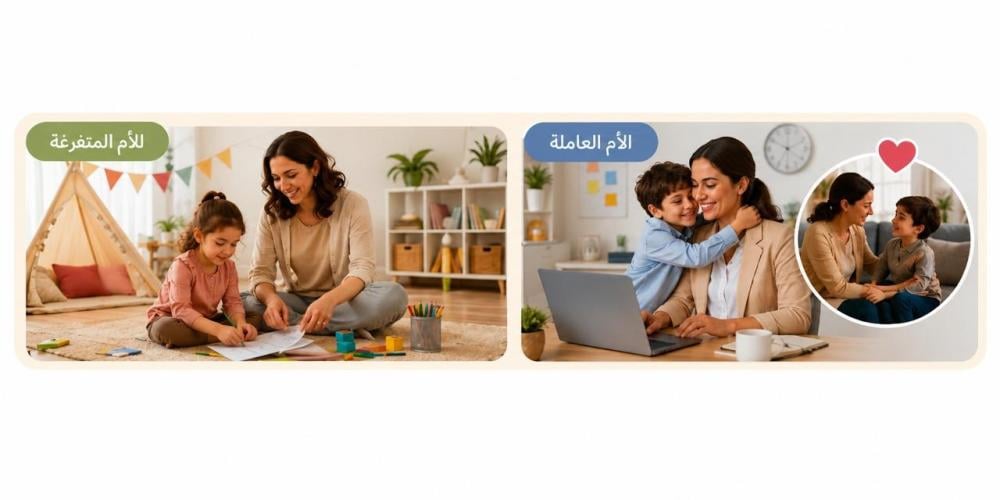
If you're a working mother: Don't try to replicate the schedule of a stay-at-home mom, and don't compensate for your absence with a packed schedule of activities. Focus on the "quality of your presence" after you return. Give your child a short period of emotional connection (a hug, a quiet chat, or a close session) before you start asking about chores and responsibilities; your child needs the warmth of your presence more than they need classes and activities.
Make your child a partner in the system
Older children: Involve them in the planning; ask them about activities they would like to try this summer, and the simple responsibilities they can handle.
Younger children: Show children the sequence of their day using a simple picture board:
☀️ Wake up ← 🥣 Breakfast ← ⚽ Movement ← 🧩 Play ← 🍽️ Lunch ← 📖 Quiet ← 🌳 Going out ← 🌙 Sleep.
In short: Vacation is not a summer version of school.
Vacation is not a daunting void to be filled completely, nor is it a race to constantly improve a child's abilities and skills. It's a time for sleep, play, movement, and family bonding.
Don't ask yourself: "How do I fill every hour of my child's day?" Instead ask: "How do I create a rhythm for his day that preserves his mental and physical health, and leaves him space to live his spontaneous childhood?"
A successful routine is a calm system that sustains and supports the family; it contains stability that gives the child security, and flexibility that gives the family the joy of life.
If you liked this article, you will find in these products practical tools that will help you implement ideas with your child easily at home.
Make your summer vacation full of fun and learning
Get your summer fun bag From educators, which includes 30 interactive activities that develop your child’s skills, reduce screen time, and turn every day into a fun experience that combines play and learning.
Are you looking for practical solutions to raise your child through play?
Get the book "Upbringing and Play Therapy" and discover modern educational methods that help you integrate play into education, and build your child's personality in a fun and effective way.
Do you want your child to develop a love for reading and books?
Get the book "How Children Read Books" and learn about practical steps that will help you instill a love of reading in your child from their early years.