
One day, a famous artist stood with his biologist friend in front of a beautiful bouquet of flowers. The artist said proudly, "Of course you cannot see the beauty that I see in this rose, which I can easily convey with my brush." The biologist replied, "Of course I cannot see with your eyes, but I believe I see beyond the outward beauty of the rose; I also know the vital secrets within it, placed by the Almighty Creator."
The biologist has his own point of view, and so does the artist. Each point of view has its own importance. We cannot focus on appearance and neglect essence, nor can the opposite be true.
When we observe how much our children and youth everywhere are obsessed with appearances these days, we truly realize the excessive focus on material things, the elevated value of them, and the exaggerated attention paid to appearances. This is matched by a declining interest in morals and the essence of character.
Here is the fundamental question that arises: What made them so obsessed with appearances?
It's well known that our children learn from us, even without us intending to. As an educator, your concern for appearances and your repetition of phrases like, "This is an old outfit; people have seen it before. I won't wear it and will buy something else." Or, "I like to buy name brands." All of this and more is reflected in their behavior, which they learn from us through imitation.
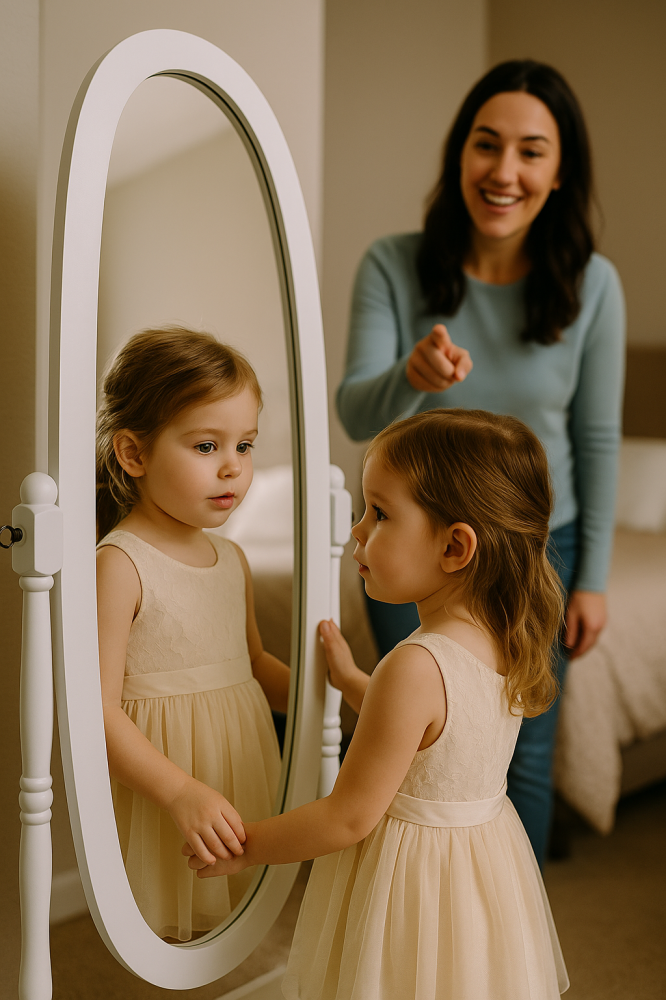
When we show interest in a child's appearance as a value that deserves praise and reward, from an early age, such as saying to a two-year-old girl, "Wow, what a beautiful dress you have!" It is true that the child initially enjoys this compliment and considers the compliment on her dress as a compliment to herself, but with the repetition of such phrases, the idea is ingrained in her that she will not gain admiration and acceptance from others unless she wears something that catches their attention.
In the early stages of a child's life, he gains self-esteem through pleasing and praising adults, which is a goal he strives for. However, in adolescence, he may suffer from low self-esteem as a result of the abundance of negative messages from his parents. His interest shifts to what his friends say and the admiration and flattery they show him, and this constitutes the main focus of his interest. Think about a quality that the child possesses other than her clothes and outward appearance. Praise her smile, her kindness, her forgiveness of her younger brother, her cooperation, and her initiative. This creates a strong personality that understands that strength lies in the essence, not in appearance.
Let us strive to fill the souls of our children with moral values that they know are the essence by which they are distinguished, and that appearances are nothing but a fading shell.